Sunday, September 2, 2018

Family Food Fights

মুরগির কলিজা 

Curried Chicken Liver


Chicken liver and potato swimming in deliciously spicy jhol :) 


Organs and innards aren't everyone's cup of tea. While heart, lungs and offal are part of everyday Bangladeshi cooking, I know many people who pass on these options. Which is their loss, as far as I'm concerned. I was introduced to animal innards early in life, and I am a big proponent of cooking and consuming them. After all, as people who eat meat, we should make efficient use of the animals we (indirectly) kill. I eat everything from cow's intestines to chicken's feet and goat's lung, and in fact, intestines are a particular favourite in my family! 

The most common organs at my table, however, come from the humble chicken. While I was growing up, everything from the head and brain, to the heart, gizzard and other parts I have no English translations for, would be cooked into our everyday chicken dishes. And that would set off the fighting between siblings and cousins, as we tried to decide who would get to eat what. The head seemed to be most people's prime target, though for me, the prize was always the liver. And with no one else interested, I grew up stuffing my face with the liver from every chicken cooked at home. For me, chicken liver with its soft, fluffy texture is like an amazingly meaty, savoury cake. And I love it just as much as I love cake.  

Calamity struck when we moved abroad though, where supermarket chickens were sold without livers. The next few years of my life were spent devoid of chicken liver, except during the visits back home, or after the odd trip to particular butchers. However, it seems more and more supermarkets in Britain (where I currently live) stock liver as a standalone product. This has meant a return to cooking liver curry for me. The spicing I favour is similar to most other Bangladeshi curries, though the amounts of each spice is toned down in comparison. Chicken liver cooks easily, and doesn't need the super-charged treatment that cow or goat liver might warrant. The recipe below is for 400.00 g - the standard weight sold near me. This technically serves two generously as a main dish, but as liver is rather rich I'd recommend it as a side dish shared amongst a few more. 


Wednesday, August 1, 2018

Cooking on the Trail

সবজি ডাল  
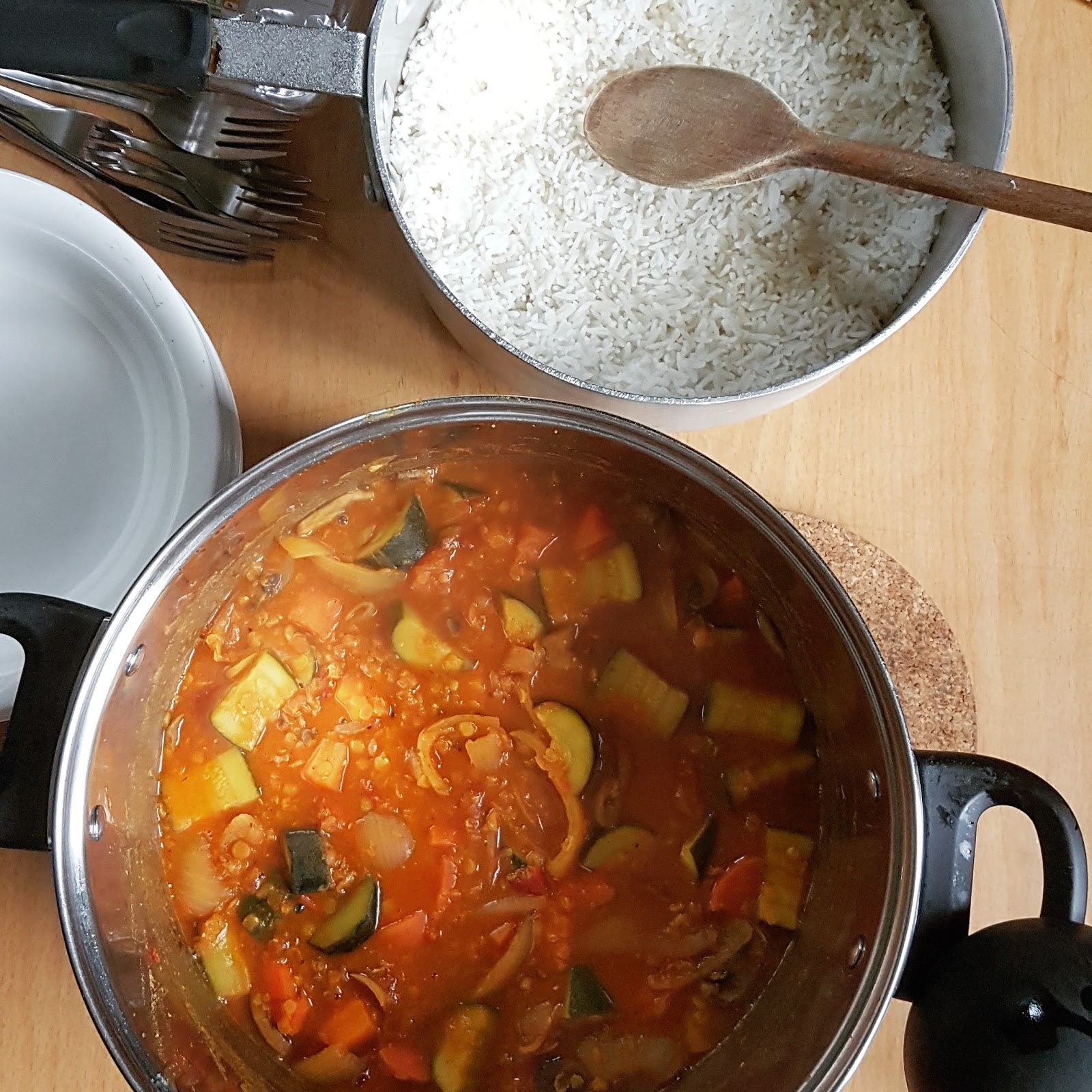
Daal with Vegetables


Spiced daal with vegetables


I spent a weekend in Glen Affric earlier this summer, staying at an off-the-grid hostel while attempting to climb some local munros. The hostel itself was quite unique - 13 kilometres from the nearest road and powered solely by a wind turbine and solar panels. This is enough for lights and some heating, but not much else. Cooking is done on gas stoves - supplied by cylinders that are transported in using off-road vehicles. The remote location also makes it difficult to carry supplies onto site regularly, and guests are encouraged to bring food for their own trips. I was travelling with a group of friends, and we all pitched in to carry enough for 3 days. But this was 3 days without access to refrigeration, and we had to make sure everything we brought was non-perishable. 


Did I mention Glen Affric was beautiful?! 


I was in charge of dinner on day 2, and I had to think of ingredients that would cope well without a fridge. Hence I opted for daal with vegetables - but spiced up a little to make it work as a main event. I was a little worried about feeding a group of hungry hikers something like this, especially as at my family table daal would never be more than a side dish. So I decided this iteration needed to be richer, and I immediately knew I'd be using meat spices as a base. I've also always loved tart daals with jolpai and green mango - so I replicated that tartness here with tinned tomato. For the veg, I opted for carrots and courgettes because they were tough enough to survive the journey in our backpacks. The result was a spicy, tangy and thick daal: something I know I'll be cooking for years to come. The recipe below serves 6 generously. 

Monday, May 7, 2018

Vegan Bangladeshi

নিরামিষ

Mixed Vegetables


Mixed vegetables with panch phoron


Don't worry about the title, I've not gone vegan. I'm just finally confident enough about my veggie cooking skills to share this recipe. I'm not sure quite why it took me so long to get here, but vegetables don't come to me as naturally as meat. I find it more difficult to get the flavours right, and the cooking times correct. However, I am trying to eat more of them, while at the same time cutting down on meat for health and environmental reasons. Right now I'm helping this process along with a bright and interesting recipe for mixed vegetables with panch phoron, a staple of most Bangladeshi kitchens. Aside from simple turmeric-and-chilli stir fries and hearty mashes, this is how I'd expect vegetables to be eaten in a Bangladeshi household. In our family, vegetables cooked this way could be served for breakfast, lunch or even dinner - though hopefully never all on the same day!

Panch phoron is a five-spice mix consisting of cumin, fennel, fenugreek, black mustard and nigella seeds. If you're not in Bangladesh, don't fret. The mix is commonly stocked in many Asian corner stores and supermarkets around the world. Of course, you can always make up your own mixture, using each component in equal amounts. My most vivid memories of panch phoron are from its use in pickle-making, along with cooking vegetables like this. In my mind, panch phoron is to cooking what colour-blocking is to the fashion world. In most dishes I make, the spices come together and create a unique new flavour - like a colour-coordinated school uniform. It's not so with panch phoron, where instead it feels like the different flavours all compliment and bounce off each other. If you're not Bangladeshi, this spice mix may feel like an acquired taste. 

The recipe below is quite long, but only because I've broken it down into simple, easy-to-follow steps. I would advise not using store-bought garlic and ginger pastes here. The short cooking time won't rid them of their vinegar-y smell. You wouldn't normally encounter chickpeas in this dish, but the eateries near my late nani's all make their shingara fillings this way. Inspired by them, I've included chickpea in my recipe too. It adds some protein, and helps me turn this into a one-dish dinner for weeknights.

Finally, a few notes on the cooking times. These will vary depending on the vegetables used. Fresh, younger plants will cook faster than the older and tougher. Equally, there will be differing opinions on what constitutes "cooked". Some people prefer everything in this dish to go soft and mushy, while others prefer their vegetables to retain a slight crunch. In our family, we opt for the crunchier version of this dish, unless we're serving it for breakfast. For breakfast, we cook this for longer than stipulated below, and with more water. The end result would be soft dollops of vegetable and a tiny bit of broth - ideal for scooping up with ruti! Do experiment with timings and combinations that suit your own preferences. The recipe below serves 4 as part of a larger Bangladeshi meal. 

Saturday, February 17, 2018

Re-Inventing The Wheel

থাইম, মধু ও সৃরাচা দিয়ে মুরগি  

Chicken with Honey, Thyme & Sriracha


Serving challenges when you have no dining table! 


I discovered how well Sriracha and thyme compliment each other by accident. I was basting some chicken in thyme-butter one day, and the Sriracha was just sitting there on the counter...calling to me. I added some to the frying pan, purely because I always love a little heat in my food. I realised the combination was a success with my first mouthful, and made a mental note to try it again in the future. Fast forward to early 2018, and I started to make mom's chicken ketchup curry, only to realise there was no tomato ketchup at home. I quickly decided substitute in Sriracha, and as soon as I did I recalled my previous positive experience with thyme. 

I wondered how to incorporate the herb into my curry, eventually deciding to stir it in towards the end of the cooking process. The thyme didn't impart a pronounced enough flavour in this first try. In subsequent iterations, I've also scattered an extra portion into the pot before taking the dish off the heat. All in all, I end up using quite a bit of thyme because it's easily overpowered by the other spices. The herb gives the dish quite a nice after-kick of flavour, but I do recognise this is probably a rather esoteric, acquired taste. I don't think I'd be a fan had I not learned to love thyme while living in the UK. Of course, feel free to leave the thyme out completely if you so desire, and the end result will be a strong, garlicky version of my mom's original curry.  


Monday, January 29, 2018

Basic Bangladeshi Greens, Part 1 of n

Swiss Chard with Mustard & Fennel Seeds

সরষে ও মৌরি দিয়ে সুইস চার্ড 


Messy but delicious


I bought Swiss chard by mistake the other week. Embarrassingly, when I got home and unpacked my groceries, I didn't recognise the plant for what it was. I tentatively trimmed and washed some of it, then cooked it into mac & cheese. I was counting on the smoked cheese from my sauce to cover up any weird tastes or smells. It turned out the apprehension was unnecessary, as eventually someone on Instagram confirmed it was just chard! Chard I could work with, and I initially contemplated cooking the remaining plants just like spinach. Our family relies on the tried and tested garlic-and-chilli combo to cook most of our leafy vegetables, expect for maybe potato leaves and thankuni patha. 

But then I reconsidered, and began wondering how I could incorporate mustard into the dish. I've been a little obsessed with mustard since moving to Scotland, and I go through this thought process for pretty much everything I cook now. I decided ground mustard seeds would work quite nicely as a base flavour, with some fennel seeds as complement. I rounded off the ingredients list with a little turmeric for colouring, and some sliced onion to ease the frying process. The result was a win: think soft pieces of plant peppered with caramelised onion, each mouthful accentuated by a slight prickly heat from the mustard. I'm definitely adding this to my regular vegetarian repertoire. Speaking of which, I'm hoping to post more recipes for easy to cook greens, hence the title of this post. The recipe below makes enough for 2 as a small side, but scales up quite easily.