Wednesday, July 19, 2017

The Best Biriyanis in Aberdeen


All lined up for Biriyani Club!


A dish of fragrant rice cooked with spiced meat, biriyani is an old favourite of mine. In our family, it has always been celebration food. We usually buy biriyani from any one of Dhaka's numerous biriyani houses, or less commonly cook it - and I've posted my mom's recipe on the blog already. It's something I often order while eating out  in the UK, and a friend suggested collating my experiences for Aberdeen in one post. Something short and snappy - useful for folks who don't want to read long, in-depth reviews. 

I've been doing an informal biriyani tour of the town for a while anyway, so this post has an easy, happy challenge! I've stuck to some hard and fast rules throughout the process (see the footnotes at the bottom). This will be a live post, and I will be updating and reposting it as I eat at more restaurants. Hopefully old names will drop off and new names will appear. I don't know how many venues I'll list when I'm done...but I'm aiming for the top 5 right now. I will mostly limit myself to writing about biriyani here, rather than diverging into fuller reviews. Also, a big thank you to my long-suffering friends, who have often waited patiently as I photographed everyone's food :)


Tuesday, June 27, 2017

Korola Masochism

করলা ভাজি
Stir-Fried Bitter Gourd


Stir-fried bitter gourd garnished with red chilli

I've moved to a neighbourhood with a Bangladeshi store around the corner! Unsurprisingly, I've been re-living all kinds of childhood food memories. I try not to buy perishables with lots of air miles, but I couldn't resist picking up a couple of fresh looking bitter gourds the other day. Bitter gourds, or korola, get their name from the very distinct bitter taste they retain even after cooking. Despite this, they are unreasonably popular back home, probably because the fruit has long been associated with alleged health benefits. I've heard people claim it does everything from curing an upset stomach to preserving healthy eyesight. 

I suspect the fruit I bought (photo in this post) is from India, as commonly available Bangladeshi varieties are quite small. They're eaten green and unripe, usually fried but also on occasion mashed or stuffed. Folks have various methods of dealing with the bitterness. The most common technique I've come across is to cook the gourd in lots of oil with plenty of onion and potato to distract from the bitter taste. On a similar principle, some people garnish the gourd with chopped coriander or squirt lime onto the dish to mask the taste with sour notes. Others soak the fruit in salt-water to counteract the bitterness, though I have never tried this myself. 

My family was quite masochistic when it came to korola though - we'd often have it without any onions or potatoes - fried in a bare minimum of oil, salt and turmeric.  The recipe below is a little more conventional, with onions and potatoes left in. Be as healthy or unhealthy as you want with the amount of oil. This makes a good side as part of a larger meal - it's the kind of everyday dish cooked alongside plain rice and simple chicken. Given my childhood hatred for vegetables, I find it hard to believe now that I liked this dish quite so much!


Friday, June 16, 2017

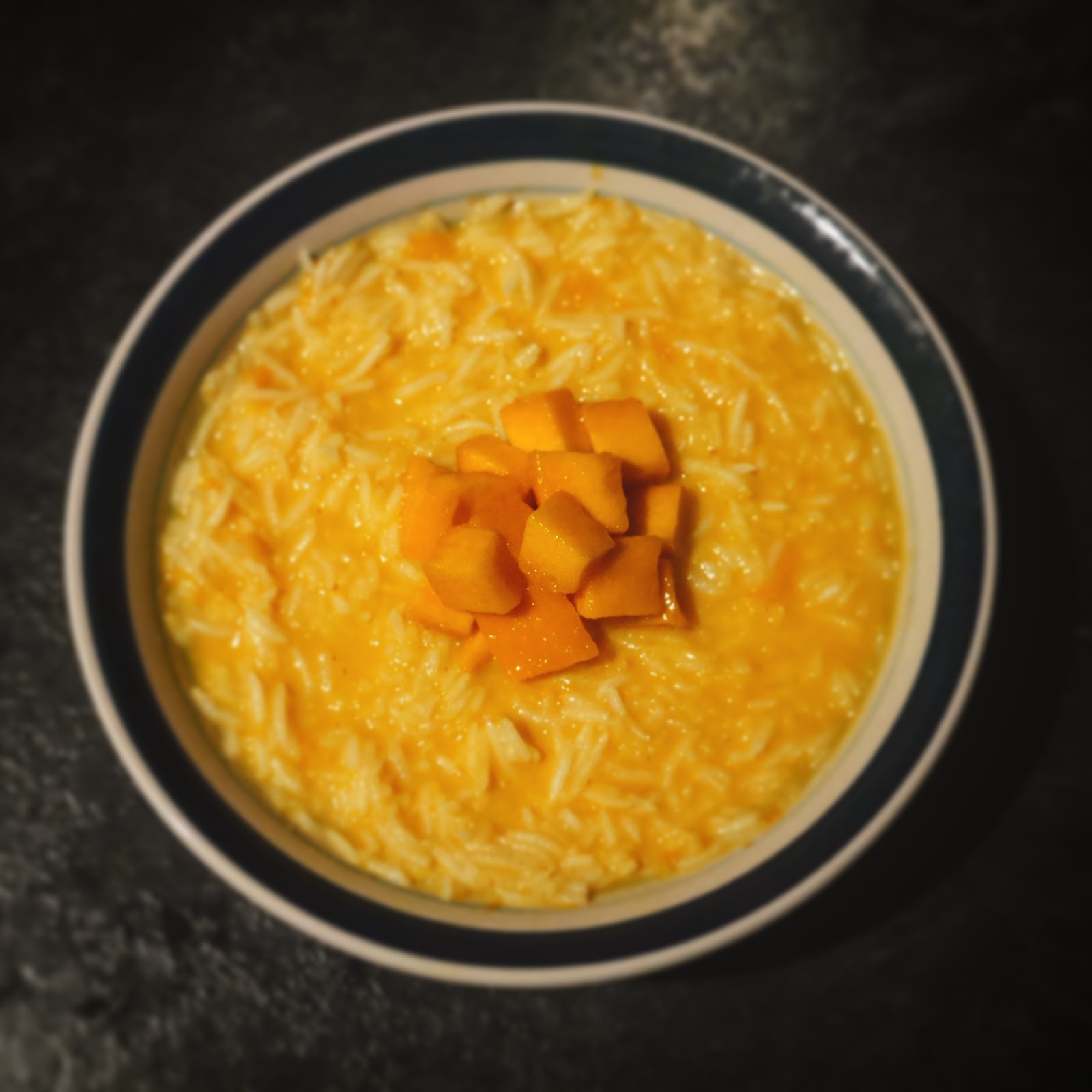
Breakfast during Mango Season

আম দিয়ে দুধ-ভাত
Rice with mango-milk


Rice and mango-milk, topped with mango
What's not to like? :) 

It's mango season! In Bangladesh this means a glut of mangoes everywhere. Their sheer number has people scrambling to find ways to use them up. On top of cooking, pickling and drying, making mango-milk is another common way we at the fruit growing up. We mixed the pulped flesh of a sweet, ripe mango into hot milk, creating a warm alternative to the mango lassi. Sometimes, we would pour this onto rice - the result of a family habit of pouring any kind of milk onto rice. In fact, whenever we didn't like the food on offer for a particular meal, rice with milk was the go-to substitute dish for the kids in my generation. 

Of course, unconventional meal replacements aside, this dish makes a great breakfast. I also have it for seheri (the pre-fasting meal during Ramadan), as it makes a nice change from cereal. Folks who've had Thai mango with sticky rice will be familiar with the flavour and textures. To make this, you want mangoes that almost melt when crushed, rather than those with firm, springy flesh. In the UK, safe bets are South Asian mangoes sold as Alphonso or Kesar. When fresh mangoes aren't in season, tinned mangoes are another option. The recipe below makes a full "meal" for one, or serves two to three as a snack.

Ingredients:
  • 1.00 small South Asian mango (around 175.00g whole, unpeeled)
  • 150.00 g cooked rice
  • 100.00 ml whole milk
  • Sugar, to taste

Method:
  • Heat the milk in the microwave for a minute
  • While the milk is heating, peel and slice the mango
  • Crush the flesh to form a pulp, and remove any overly large pieces of fibre 
  • Mix the mango into the milk, and taste for sweetness. Add sugar if desired
  • Place the cooked rice in a bowl. Pour in the mango-milk and mix
  • Serve while warm

Additional Info
If you want something a bit richer, heat and thicken the milk on the hob before adding the mango. For a different flavour, swap the mango for banana, something we would also do quite commonly in our family. 

Tuesday, May 9, 2017

Review: Nopi

Impressive cooking with a big price tag


Grilled trout with labneh, yuzu kosho and a colourful radish.
A simple but delicious small plate at Nopi


I discovered Nopi the cookbook before Nopi the restaurant. The book, a birthday present, was my first of complex restaurant recipes. I've spent multiple weekends putting it to use, embarking on culinary adventures of exciting flavours. I learned how to retrofit familiar ingredients in service of the venue's cooking style, which combines the Middle Eastern and Southeast Asian, to create new-to-me flavours. Having enjoyed the recipes so much, I’ve now made multiple trips to eat at the actual establishment. I'm surprised to say that the hype (in my own mind of course!), was indeed worth it. 


Wednesday, May 3, 2017

Meaty Comfort Food

গোরুর কিমা 
Lime & Coriander Beef Keema

Beef keema 


Growing up, keema - or minced meat - was only meant for kebabs. I use it in my own recipe for beef kebab, as do the other Bangladeshis I know. But over the years, especially since moving to the UK, I've realised many Asian families, Bangladeshi or otherwise, cook their mince directly.The flavours from the various iterations I've eaten have been simple and recognisable. As such, I've always known that I could re-create the recipe myself from scratch - and indeed I have, if you've seen my Instagram feed. But I wanted the actual recipe I posted on the blog to be traditional, and so I turned to one of my friends for help. He has a go-to keema dish that he uses for dinner parties, and it always goes down a storm. The original recipe comes from his mom, traveling from Pakistan via a few other countries, and I've mostly kept it intact below. 

My friend's mom cooks her keema with peas and potatoes, but my friend usually skips these (too much effort, according to him!). I've added the peas back, because vegetables, but not the potatoes, because carbs. I've made one ingredient swap, from tomato paste to fresh tomatoes, as I never have the former in my kitchen. I've added a cinnamon stick, a personal bias: I never caramelise onions for a curry without one these days! Finally, I've also added lime and fresh coriander - something I've also seen others do - because I like the flavour. I prefer to use lean mince for this dish, but work with whatever you prefer or have at hand. This recipe produces a dish that is very similar to my/my mother's recipe for beef curry. This doesn't come as a surprise - most of the spices used in both recipes are the same. What's worth a mention though is that mince is much quicker to cook, so you're looking at a much shorter period in the kitchen with the below.