Showing posts with label fusion. Show all posts

Wednesday, December 19, 2018

Roast Stuffing "Innovations"

Lamb & Apricot Kofta


Our Christmas spread last year: roast, veg, gravy,
biriyani, mac & cheese among others.
Hasty, blurry photos were taken,
but you can still see I burned some of the kofta! 


Since moving to the UK, I've made it my mission to consume as many Christmas-style meals as possible during the month of December. I love cooking roasts and its accompaniments because I don't usually get to, and of course I love any kind of meal that brings people together. Last year I spent the holidays with friends, and we made a joint meal where I volunteered to do the roast and stuffing. The roast was a very simple affair - think normal Bangladeshi spicing on a chicken, marinaded overnight before going into the oven. The stuffing, however, was a little different - because basically it was this. 

I think stuffing is traditionally made from breadcrumbs pimped up with herbs, spices and (usually) pork sausage. Most of us at the meal last year didn't eat pork, so I initially considered replacing it with another fatty minced meat. This line of thought eventually led me to kofta - and finally I decided I'd just make lamb kofta with some breadcrumbs and pass it off as stuffing. I added the apricots as I've been served stuffing with apricot before in British households, and I really enjoy the lamb and apricot combo. Once I'd decided on the apricot, I thought why not also use up the jar of Moroccan spices languishing in my cupboard, hence the ras el hanout. If you don't have ras el hanout at home just swap for powdered cumin and coriander seed.

These koftas can be deep-fried or roasted in the oven - do whatever suits your routine.  Roasting makes them a bit drier, unless you do of course stuff them inside a roasting bird. I've given pan-frying instructions below to keep things simple. The breadcrumbs in the recipe below are definitely optional. As you'd expect, they give the koftas a heavier, drier feel. Without them, expect something meatier and bouncier. If you look at my recipe for beef kabab, you'll notice a lot similarities in both method and ingredients. Both dishes have the same roots, but the bread and beef creates a pate-like texture with bite, while the fatty lamb gives you a more squidgy, elastic end-result. The recipe below makes enough koftas to serve 4.

Ingredients:
  • 500.00 g of lamb mince
  • 1.00 large onion
  • 1.00 tablespoon of garlic paste
  • 1.00 tablespoon of ginger paste
  • 75.00 g dried apricot
  • 2.00 tablespoons of supermarket ras el hanout (alternatively, use 1.00 tablespoon each of powdered cumin and coriander seed)
  • Fresh parsley, a small handful
  • Fresh coriander, a large handful
  • Fresh mint, a small handful
  • Breadcrumbs (optional), a small handful 

Method:
  • Grate the onion by hand or in a food processor
  • Thoroughly mix all of the ingredients together, making sure that the herbs and spices are distributed evenly within the meat
  • Form small sausage-like kofta shapes of the mixture, each about 4.00cm in length. Make sure they aren't too fat, or it will be difficult to get the middle to cook
  • Put a frying pan on medium heat. Pour in enough oil so that the liquid is deep enough to submerge about half a kofta
  • Once the oil is hot, add the koftas to the pan, being careful not to overcrowd the vessel. Unless the frying pan is massive, expect to cook the koftas in batches
  • Fry the koftas on medium heat for about 3-4 minutes, then flip them over and fry for another 3-4 minutes on the other side
  • When done, the koftas should be evenly browned. This can take practice - I've often cooked them too long and burned them black 
  • Also important - resist flipping them before 3-4 minutes have passed, as the meat won't have cooked and sealed, and the kofta could fall apart from the movement
  • Serve the koftas hot with flat breads like naan or pitta 

Additional Info
For easy variations, play around with the herbs and spices. And of course, omit the apricots if you don't like the sound of them! To cook these in the oven, pre-heat a fan oven to 200C, place on the middle shelf and cook for 25-30 minutes. 


Saturday, February 17, 2018

Re-Inventing The Wheel

থাইম, মধু ও সৃরাচা দিয়ে মুরগি  

Chicken with Honey, Thyme & Sriracha


Serving challenges when you have no dining table! 


I discovered how well Sriracha and thyme compliment each other by accident. I was basting some chicken in thyme-butter one day, and the Sriracha was just sitting there on the counter...calling to me. I added some to the frying pan, purely because I always love a little heat in my food. I realised the combination was a success with my first mouthful, and made a mental note to try it again in the future. Fast forward to early 2018, and I started to make mom's chicken ketchup curry, only to realise there was no tomato ketchup at home. I quickly decided substitute in Sriracha, and as soon as I did I recalled my previous positive experience with thyme. 

I wondered how to incorporate the herb into my curry, eventually deciding to stir it in towards the end of the cooking process. The thyme didn't impart a pronounced enough flavour in this first try. In subsequent iterations, I've also scattered an extra portion into the pot before taking the dish off the heat. All in all, I end up using quite a bit of thyme because it's easily overpowered by the other spices. The herb gives the dish quite a nice after-kick of flavour, but I do recognise this is probably a rather esoteric, acquired taste. I don't think I'd be a fan had I not learned to love thyme while living in the UK. Of course, feel free to leave the thyme out completely if you so desire, and the end result will be a strong, garlicky version of my mom's original curry.  


Sunday, August 6, 2017

Bangla-Chinese Experimentation

Chicken & Naga Pickle Stir-Fry


Steamed rice with chicken & naga pickle stir-fry


I've relied on stir-fries for relatively healthy meals ever since university, though I've graduated from readymade sauces by now. This is a very simple stir-fry that I sometimes cook on weekdays, albeit with a slight twist - naga pickle. Usually, I stir-fry my chicken with a little garlic before adding soya and oyster sauce, followed by various veggies. I'm a big fan of naga pickle, and so one day I made the decision to marinade chicken in this before cooking. I knew I'd like it...so I'm not sure I should be calling it experimentation! However, the flavour (and the kick!) here is quite strong, so it won't be for everyone. The recipe below serves two generously.


Ingredients:

  • 400.00 g boneless chicken breast or thigh
  • 1.00 teaspoon of garlic, crushed
  • 1.00 teaspoon of ginger, shredded
  • 2.00 tablespoons cornflour
  • 1.00 tablespoon sesame oil
  • 1.00 tablespoon naga pickle and oil
  • 1.00 carrot
  • 80.00 g of asparagus tips
  • 80.00 g of sprouting broccoli (or just broccoli)
  • 7 or 8 mushrooms
  • 1.50 tablespoon soya sauce
  • 1.50 tablespoon oyster sauce
  • Spring onion, to taste
  • Sesame seeds, to taste


Method:

  • Cut the chicken into cubes. Mix with the sesame oil, naga pickle, cornflour, garlic, ginger and leave to marinate while preparing the vegetables
  • Slice the mushrooms into slivers, shave the carrot into thin strips using a peeler and cut the broccoli into bite size pieces. Leave the asparagus alone apart from cutting off any stringy, older parts
  • Heat a frying pan on the stove, then add the chicken. On medium heat, fry for 8 minutes, adding a little water if the cornflour starts to stick (this will be unnecessary if your chicken is sold with a high water content)
  • While the chicken is cooking, toast the sesame seeds in a small pan without oil, until they begin to brown. Take off the heat and set aside
  • Turning back to the chicken, add the soya and oyster sauces along with a little water, then cover and cook for 2 minutes on medium low heat
  • Lift the cover, and deglaze with a little water if necessary 
  • Add the vegetables, then cover and cook for a further 4 minutes
  • While the vegetables are cooking, slice the spring onion into little pieces
  • Take the dish off the heat, and serve sprinkled with the toasted sesame seeds and spring onion

Additional Info
Feel free with switch up the sauces (try mirin or fish sauce) and of course, the vegetables. I've only cooked them for 4 minutes because I like them quite crunchy, but leave them on the stove longer if you want. Naga pickle is available to buy at most South Asian stores in the UK. It's sold in small jars, and can be mixed into dips or served as a side during meals.

Friday, June 17, 2016

Review: Romulo Cafe London

A Holiday Substitute


Suman latik: fried rice cake with coconut cream,
dark coconut sauce and coconut ice cream

I've wanted to make my way back to southeast Asia over the last few years, but work-life commitments keep getting in the way. So I’ve turned to another solution: finding solace in food from the region. Queue a visit to Romulo Café, a newish Filipino restaurant on Kensington High Street. A smart, medium sized restaurant, the venue is divided into themed rooms like the Library and the Diplomat’s Dining Room, each with their unique touches of funky decor. We visited for lunch on a Sunday, and the fragrance of Filipino food wafted through the air as we sat down to our table.   


Patotim: slow-cooked duck in a steamed bun


On the left, tuna kilawin. A tune ceviche marinated in cane vinegar,
with red onion, cucumber and red pepper.
On the right, pork belly with a fried egg, pickled apples and 
caramelised shallots. 


The menu at Romulo is designed to be shared, and at the recommendation of our hostess, we ordered three starters and three mains between 4. Service was slow, in the sense that both our starters and then our mains took quite a while to arrive. However, we were brought a little something during these lulls – first bread and butter, and later pork scratchings – to pass the time. And the food that did arrive was excellent. Amongst the starters, the winner for me was the patotim: a steamed bun filled with sweet and sticky slow-cooked duck. My friends were full of praise for the pork sisig, while the tuna kilawin - imagine a spicy tuna ceviche - divided opinion at the table between those who liked raw fish and those who didn't. I loved it though, especially for the spicy-onion flavours that reminded me of salads from Bangladesh. 


Lamb kaldereta: stewed lamb with peppers, potatoes, garden peas,
slow cooked in tomato sauce and topped with parmesan


On the left, chicken relleno: roast chicken with pork stuffing
On the right, flying dish: deep-fried tilapia with dips. I ate the eye.


Our mains, while still good, had a little less star power. The deep-fried tilapia kept things simple and classic, arriving at the table butterflied and accompanied by well-chosen sauces. The chicken relleno, a dish of roast chicken with pork stuffing, was fought over by my friends. The lamb kaldereta was the last dish: a meat stew with peppers, potatoes and peas cooked in tomato sauce. It reminded me of my mom's own tomato sauce based dishes, but it wasn’t particularly popular with the rest of the table. We had two sides of garlic rice to round off our meal,  and washed everything down with nostalgia-inducing calamansi cooler. However, we didn't feel done by the end of it. Some portions, like the lamb kaldereta and garlic rice, were small, and in the future I’d much order one main per person.  

Sans rival, served with ice cream

Still hungry, we ordered desserts. My friends had the sans rival, which was nice, albeit a bit tougher than it should be. Unfortunately a number of items on the menu were unavailable, and my dreams of having halo halo were crushed. That may have been for the best, as the suman latik I ordered instead was perhaps the best part of my meal. A fried rice cake with coconut cream, dark coconut sauce and coconut ice cream, it was a delicious, moreish dessert. I am generally a fan of coconut, and I also loved the contrast between the crunchy, warm cake versus the soft, cold ice cream. 

Finally satisfied, we asked for the bill. At £101 for 4 people, this seemed like very good value for money, until we remembered we’d under-eaten. Starters at Romulo are priced £7 onward, and mains £13 onward. Add the cost of rice and drinks and you’ll easily spend £30 per head here, which is unsurprising given the Kensington location. And judging by how busy it got, this a venue for planned, perhaps special meals rather than pit stops. Staff were very friendly and enthusiastic throughout, and always on hand to refill our water or drinks. I hope that as the restaurant finds its feet, the speed of the service and the availability of menu items will get better. There’s a lot of potential here, and I would definitely like to return to see how things have evolved. 


Food: 7/10
Service: 8/10
Atmosphere: 7/10
Value: 6/10

Final Score: 7/10


Contact Information
A: 343 Kensington High Street, London W8 6NW, United Kingdom
T: +44 (0)20 3141 6390
W: www.romulocafe.co.uk

NB. The final score, while influenced by the sub-scores, is a qualitative reflection of my overall impression of the establishment.

Monday, May 9, 2016

Review: Cilantro

A Rather International Menu


Inside Cilantro Dhanmondi

Cilantro has been on my Wishlist for the longest time. When they first opened, friends started posting photos of a uniquely decorated restaurant serving beautifully plated "Western" food. I was intrigued - mostly by how nice the dishes looked to be perfectly honest, while remaining hopeful that they also tasted good. Foreign food is still quite hit-and-miss in Dhaka, whether we're talking about a casual eatery or a high-end hotel restaurant. My friend's nudged my expectations downwards though, as apparently the venue was more about the look rather than the food. And while they were right, what I ate at Cilantro was nothing to scoff at, and I am glad I visited.


The Spaniard: marinated fish, battered prawn, cucumber salad
and seafood paella

The interior is an eclectic affair of exposed brick, glass bottles and a central skylight in an otherwise dimly lit space. Seating is varied between normal tables and a few lower tables, where you can take off your shoes and sit cross-legged. The restaurant's Facebook page claims it is a Latin American and Mediterranean affair, but the menu when we visited was far more international. It was also long and confusingly divided up, but I assumed that tapas were snacks or starters, and anything else was a main. They also had a specials board, and we skimmed over that before ordering two mains and two drinks. As with any restaurant attempting to cover too many bases, their dishes turned out to be inspired by their regions of origin rather than authentic offerings. This was fine with me, as everything we were served still tasted good. 


Open beef enchilada

My friend ordered the Spaniard from their specials, which was a plate of battered prawns, marinated fish, cucumber salad and paella. I'v never had anything of the sort in Spain, and there was definitely no paella on the plate. However, there was a rather nice seafood and rice concoction, and both the prawns and fish were deliciously spiced. The portion was a bit small, and their slice of fish especially should have been bigger. My order of beef enchilada, served open in layers on my plate, was more reasonably portioned. It came with generous amounts of meat and cheese. The inclusion of so much cheese was the biggest surprise - restaurants in Bangladesh are usually very stingy with this ingredient! 


Raw tamarind on the left, pink lemonade on the right

We washed our food down with a couple of mocktails - a raw tamarind drink for me and a pink lemonade for my friend. Both were nice, though I'd say my tamarind drink won out, probably due to the fresh, local ingredients. Both were very expensive though, and with drinks priced up to TK 200, this where Cilantro overcharges the most. Elsewhere prices are a bit better, with tapas from TK 200 to TK 600, and mains from TK 400 to over TK 1000 for steaks. We paid around TK 1500 for two mains and two drinks, and this felt like quite a lot for the amount of food we had. Had I not had plans to meet others for coffee later, I would have ordered more. I can easily see myself paying TK 1000 per head here for a full meal, even without opting for the expensive items on the menu. Service was a bit too chilled-out (read: slow) at the start, though staff were friendly and food did arrive quite quickly once ordered. This is definitely a place I'd go back to if in Dhaka, but it won't stop from looking for greener pastures elsewhere. 


Food: 7/10
Service: 6.5/10
Atmosphere: 8/10
Value: 7/10

Final Score: 7/10


Contact Information
A: 49 Satmasjid Road, Dhaka 1209, Bangladesh
T: +880 1766 449912
W: www.facebook.com/cilantrobd

NB. The final score, while influenced by the sub-scores, is a qualitative reflection of my overall impression of the establishment.

Saturday, April 30, 2016

No-Churn Ice Cream

নারিকেল ও লেবুর আইস ক্রিম
Lime & Coconut Ice Cream


Small servings - it is condensed milk & cream after all! 


I'm not sure why I made this ice cream. I felt I wasn't experimenting enough with my own recipes - and I guess this is the result. The methodology is adapted from a BBC Food no-churn ice cream recipe, which I've tried and tested before. The original is simply a combination of 400.00 g of condensed milk and 600.00 ml of whipped double cream, with other ingredients added to create various flavours. This makes a whopping 1 litre of ice cream, so I usually halve the recipe totals, which can be seen from the ingredients list below. 

This particular recipe is a slight modification, replacing half of the proscribed double cream with creamed coconut. This introduces the coconut flavour, as well as adding texture to the ice cream from the solid kernels. I'm quite happy with how this turned out, but note that the coconut flavour outshines the lime. Experiment by reducing the amount of creamed coconut, or by adding more lime zest. For a more intense lime flavouring, I would recommend opting for lime essence, as adding too much juice will turn the ice cream sour. Of course, there's no need to limit flavours to lime and coconut!

Ingredients:

  • 200.00 g sweetened condensed milk
  • 150.00 ml double cream
  • 75.00 g creamed coconut
  • Juice from 1 lime
  • Zest from 2 limes


Method:

All mixed and prepped for freezing


  • Mix the zest and lemon into the condensed milk
  • Dissolve the creamed coconut into 75.00 ml of boiling water, and let cool slightly
  • While the coconut is cooling, whip the double cream into stiff peaks
  • Fold the coconut and then the cream into the condensed milk
  • Pour into a freezer proof container, and freeze overnight
  • Take out a few minutes before serving for ease of scooping

Coconut & lime ice cream, ready to serve

Additional information:
I used a solid "creamed coconut" dissolved in water as that was what was available in the supermarket near me. 150.00 ml of liquid coconut milk may be a suitable substitute, though using the creamed coconut adds a certain texture from the solids. For other flavours, I would recommend combining fruit pulps, compotes etc. with double cream and condensed milk. I've also wondered whether melting chocolate into the cream and condensed milk mixture will work, though I haven't tried it as I'm not a fan of chocolate ice cream. 

Wednesday, November 18, 2015

Review: Dubravkin Put

Seafood in Zagreb, Croatia


Elderflower mousse with white chocolate,
strawberry ice cream & edible flowers

My time in Croatia was an unexpected blessing. I had been squirreling away money over the year for a potential holiday, and off-peak prices allowed me to indulge in a short trip around the country earlier this month. All I knew about Croatia was their 1998 World Cup performance (classic story of the underdog surprising everyone!) and their beaches, courtesy of a friend who had spent a summer there. As such, most of the itinerary I put together was the result of rather impersonal Googling and Lonely Planet, but Dubravkin Put stood out as a definite place to eat from multiple sources, especially for its seafood. 

The interior. The entrance to the wine bar
next to the restaurant can be seen in the left corner

The restaurant is located in Tuškanac Park, a twenty minute stroll from Ban Jelačić Square in Zagreb's city centre. We made the trip for lunch one day and arrived at a mostly empty restaurant, and were given our pick of the tables by a waiter who spoke perfect English. Language had been a worry of mine before coming to Croatia, and we were equipped with a few phrases and ingredients courtesy of our guidebook, but almost everyone we met spoke a passable level of English. Menus at most restaurants were also available in English, unsurprising given many parts of Croatia are geared towards tourism, and Drubavkin Put was no exception.

Fresh bread. Our basked included wholemeal, seeded,
tomato bread etc., with olive oil already at the table

Our waiter brought us menus as we settled in, and proceeded to recommend wine to my friend at her request. We had a busy schedule for the day and so we decided to keep our meal short, opting for mains and desserts only. Sadly most of the a la carte menu was unavailable for lunch, during which the restaurant offers a shorter and less expensive selection of dishes. However, upon hearing we were biased towards seafood, our waiter recommended trying monkfish as a main course, even though it wasn't listed on the menu. We ordered this along with another main of tuna steak, and sat back to wait for our food. A batch of freshly baked breads that were brought to our table, and we sampled the different types - I preferred the tomato bread as usual - to pass the time.  

Sunday, July 26, 2015

More Eid: Recreating Falooda

কাস্টার্ড ফালুদা 

Custard Falooda 


Custard falooda, now part of my dessert repertoire! 

I had to think twice before trying falooda for the first time. Someone had brought some home in a plastic container, and the folks were eagerly trying to make me sample a spoonful. I was probably around 10, and had never before encountered noodles floating in milk before. The dish's additional components of bright green jelly and slimy tapioca pearls just freaked me out - here was seemingly a dessert from outer space. In truth, however, falooda is apparently an import of faloodeh from Persia and has mutated into numerous variations in Bangladesh. While toppings can vary (nuts, fruit, jelly etc.), the common theme in almost every version I've had is a sweet rose-milk base, vermicelli and vanilla ice cream. Then last winter I visited Star Kebab, where they served me a very rich version based on custard. I was intrigued - they omitted ice cream to avoid being overpowering, but brought in crushed ice to preserve the cold dessert factor.

I decided to recreate the dish as accurately as possible, partly just to see if I could but also because I thought it would be something special to make around Eid. The custard recipe below is my mom's - in the past cream was difficult to procure in Bangladesh, and leaving the egg white in instead helps thicken the sauce. I also loathe to throw food away, so there's also that. Another thing that surprised me about England was how sugar-free all the custard is, and the extra sweetness is courtesy of the style of custard I grew up with. Bear in mind in this recipe the custard will be providing the majority of the sugar, rather than being an accompaniment for cake or pie. My favourite custard also smells nothing like egg, hence the generous lashings of (weak) vanilla essence and some nutmeg. I limited the rosewater to the jelly, mostly because I thought rose-flavoured custard would be just a little too overwhelming. I was quite happy with the result, although in the future I'll probably skip the jelly and the pearls and just go with fruits, nuts and noodles to keep my life simple. 


Friday, January 30, 2015

Adding Ingredients

Jaggery-Laced Chocolate & Peanut Butter Cheesecake


Jaggery-laced chocolate & peanut butter cheesecake.
And yes, I did have this for breakfast today.

I'm not a baker, and this is undoubtedly a good thing. I have a sweet tooth and a great love for cake, and if I were a baker I'd have to accept becoming a balloon as well. That being said, baking is a skill that adds a degree of versatility to my abilities in the kitchen, so there are a few things I want to make sure I know how to bake. My first ever attempt at baking involved a sponge cake - a dense mass of flour, sugar, butter and eggs that refused to rise. My baby brother was the only one willing to try it, probably because he didn't know any better at that age. Over the years, things have gotten a little better. I can make a decent pumpkin pie, and am occasionally successful with my brownies and lemon tarts. 

I've always had a thing for baked cheesecake, a dessert I was introduced to in Hong Kong. Last week I decided it was time to add a version of it to my limited repertoire. My childhood memories are of a rich, solid salty-sweet cheesecake, but the recipe below produces something more delicate and definitely sweeter. It is adapted from a BBC Food recipe by Nigella Lawson, and the original can be found here. I am changing the instructions for hand-mixing, modifying amounts and substituting a few ingredients, notably jaggery for brown sugar in the topping as I wanted to use something Bangladeshi. Note that if you do have access to a food processor, use it - it makes life a lot easier! 

Tuesday, December 31, 2013

Cultural Adaptation

ক্রাম্পেট দিয়ে দুধের পিঠা
Crumpets with Jaggery Laced Milk


This is our New Year meal!

Most of us who travel have things that we miss and can't have from the place(s) we consider home. In Bangladesh, we have various types of 'cakes' called 'pithas'. One of these is the chitoi pitha, made by frying a gelatinous dough of rice flour in oil. This is then soaked in jaggery laced milk to transform it into dudher pitha, or milk pitha. The right kind of rice flour is hard to come by in Europe, and many Asian families have adapted by substituting chitoi pitha with crumpets. This is probably because chitoi has a similar feel to a crumpet - imagine something a little tougher with smaller holes. 

My mom first made this dish with crumpets in Hong Kong, and it has been one of my favourites since. I personally don't miss the traditional dudher pitha, simply because it wasn't what made my childhood memories. Instead, I give you here the very simple crumpet version I grew up with, and also wish you a very Happy New Year.


Sunday, October 7, 2012

Local(ish) Ingredients, Bangladeshi Twist

Smoked Mackerel with Red Onions & Coriander

The coriander in the UK is so weak..


It's always interesting to see how people cook Bangladeshi food while they're not actually in Bangladesh. Granted, you can get a lot of imported ingredients nowadays, but being abroad results in a lot of improvisation and experimentation with local products. The end product is often very satisfying, as it was for me today.

In Bangladesh we have a variety of - for lack of a better term - mashed fish dishes. We cook the fish with a touch of spice, de-bone, mash and combine with various other herbs, spices, oils etc. Over the summer, I went to a house where I was served mackerel combined with red onions, coriander and mustard oil, inspired by this Bangladeshi way of serving fish. It worked really well, but unfortunately I forgot to ask exactly how the mackerel itself was prepared.  

Working from memory, I remembered the fish wasn't spiced like it would be in the usual Bangladeshi dish. Wanting something a bit different for lunch today, I decided to recreate a version of it. I couldn't get my hands on any mustard oil, so I substituted with olive oil. I also had no idea how to cook fresh mackerel, so I went for the smoked variety. I added a few more things here and there, and the result was as you can see in the picture above. I will, however, be trying this again with fresh mackerel and mustard oil.


Sunday, August 19, 2012

More Fusion: An Experimental Sorbet

Spiced Tamarind Sorbet

Spiced tamarind sorbet with henna leaves (because we couldn't find anything else for garnish!)


Tamarind based drinks are pretty common in Bangladesh. They're usually served cold and spiced to provide relief from the summer heat. Summer temperatures easily surpass 35 degrees Celsius here (even though Google lies and insists it's 28 degrees!) and as such, I imagined a sorbet would be an even more welcome comfort. I've been looking up sorbet recipes from around the web, and I'm adapting this recipe from the Coconut Raita blog's Tamarind and Lime Sorbet post. I'm pretty proud of it - it's essentially replica of our family's usual tamarind drink in sorbet form, and it's even been given a thumbs up by my grandma who's notoriously snobby about good food!


Thursday, July 26, 2012

The Slightest Hint Of Fusion

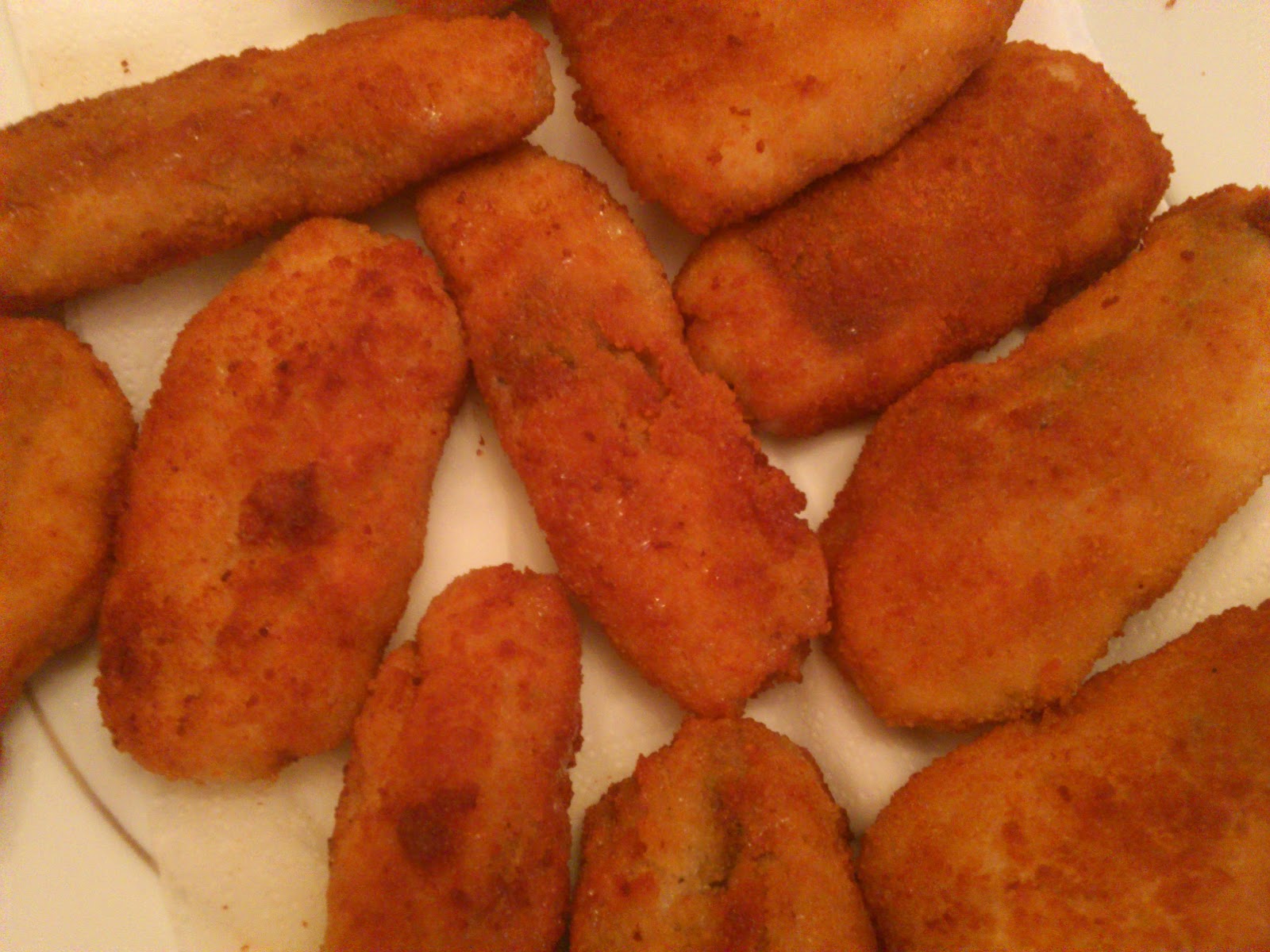
Mom's Fish Fingers

Fish fingers, but a little more exciting than usual

Fish is an integral part of the Bangladeshi diet - probably something to do with the many rivers, lakes and ponds in the country. It's very common at our table too, but sometimes in surprising forms. I have no idea how actual fish fingers are made, but this is how mom makes them at home. She adds some spices to make the fish a little more exciting than your usual frozen supermarket fare, before . I have no amounts written down for this recipe unfortunately, as everything is to taste depending on how strong you want your marinade.